

Neural Networks Explained Simply: How Machines Learn Like Humans
Introduction
Today, we discuss Neural Networks Explained Simply. Have you ever wondered how your phone recognizes faces, how Google translates languages, or how self-driving cars make split-second decisions? The secret behind these innovations lies in a powerful concept called neural networks.
In this article, we’ll dive deep into Neural Networks Explained Simply—without the confusing math or technical jargon. You’ll learn how they work, why they’re compared to the human brain, and how they’re changing the future of technology.
What Are Neural Networks?

A neural network is a computer system inspired by the way the human brain works. Just like our brains use neurons to process information, neural networks use artificial neurons—called nodes—to analyze data, make predictions, and learn from experience.
In simple terms, neural networks are the foundation of modern Artificial Intelligence (AI). They help machines recognize patterns, understand speech, translate languages, and even generate creative content.
When you hear about AI tools like ChatGPT, Siri, or image recognition software, they all rely on some form of neural network.
How Neural Networks Learn Like Humans
Humans learn through examples and experience. For instance, a child learns what a “dog” is by seeing different dogs and hearing the word repeated. Neural networks learn similarly.
They process thousands—or even millions—of examples to understand what defines a particular object or pattern. Over time, the network improves its accuracy, just like a person gets better with practice.
This process is known as machine learning, and when neural networks are used, it becomes a powerful form called deep learning. [1]
The Structure of a Neural Network
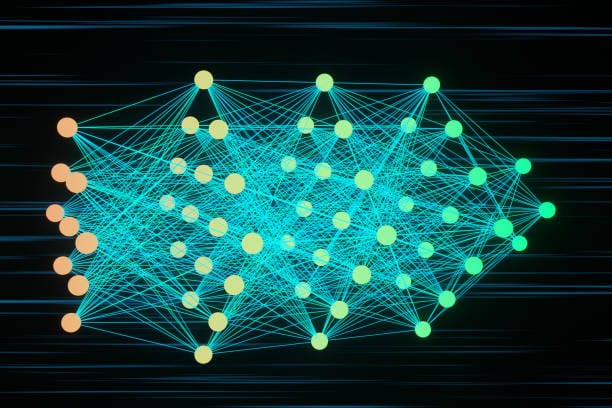
To understand Neural Networks Explained Simply, think of them as layers of interconnected nodes.
Each node performs a small calculation and passes information to the next layer. Here’s how it’s structured:
| Layer Type | Function | Example in Real Life |
|---|---|---|
| Input Layer | Receives the raw data | Your eyes seeing an image |
| Hidden Layers | Process and extract features | Brain identifying colors and shapes |
| Output Layer | Produces the final result | You recognizing the object as a “cat” |
The hidden layers are where the “learning” happens. They adjust their internal connections, called weights, based on how well the network’s prediction matches reality.
Training a Neural Network
Training a neural network involves feeding it large amounts of data and helping it correct mistakes.
Here’s a simple explanation of the training process:
- Input Data: The network receives data, like images, sounds, or text.
- Prediction: It makes an initial guess or output.
- Error Calculation: The system checks how wrong that guess was.
- Backpropagation: The network adjusts its internal weights to improve next time.
Over many cycles, the neural network becomes smarter—just like humans learn from their errors and experiences.
Why Neural Networks Are So Powerful
Neural networks can handle complex, non-linear problems that traditional algorithms struggle with.
Some key strengths include:
- Pattern Recognition: Great for detecting faces, voices, or objects.
- Adaptability: They improve with more data.
- Automation: Reduce the need for manual programming.
- Versatility: Can be used in almost every industry—from healthcare to finance.
For example, in medicine, neural networks help diagnose diseases from X-rays. In marketing, they predict customer behavior. And in transportation, they guide autonomous vehicles.
Types of Neural Networks
There are several types of neural networks, each suited for different tasks. Let’s explore the main ones in simple terms.
1. Feedforward Neural Networks (FNNs)
The most basic type. Information flows in one direction—from input to output. Used in simple prediction models and classification tasks.
2. Convolutional Neural Networks (CNNs)
Specially designed for image processing. CNNs help systems identify objects, faces, or handwriting. They’re behind tools like Google Photos and facial recognition apps.
3. Recurrent Neural Networks (RNNs)
Used for sequential data, like text or speech. RNNs remember previous information—making them ideal for chatbots, language translation, and speech recognition.
4. Generative Adversarial Networks (GANs)
These are creative networks that can generate new content—like realistic images, videos, or even music. GANs[2] are behind the creation of deepfakes and AI art.
Real-World Applications of Neural Networks
Neural networks are now part of our everyday lives, even when we don’t notice it.
Here are a few examples of how they shape our world:
- Healthcare: Predict diseases, analyze scans, and suggest treatments.
- Finance: Detect fraud and make stock market predictions.
- Entertainment: Personalize movie recommendations on Netflix or music playlists on Spotify.
- Education: Power intelligent tutoring systems that adapt to each student’s needs.
- Transportation: Enable self-driving cars and optimize traffic control.
Each of these examples highlights how machines are learning to think more like us—an exciting step toward human-level intelligence.
Advantages and Challenges
Like any technology, neural networks have their pros and cons.
Advantages:
- Can process vast amounts of data efficiently.
- Learn and improve automatically.
- Provide highly accurate predictions.
Challenges:
- Require large datasets and computing power.
- Often work like “black boxes” (it’s hard to see how they make decisions).
- Can make biased predictions if trained on biased data.
The Future of Neural Networks
The field of neural networks is advancing rapidly. Future developments may lead to even more human-like intelligence.
Researchers are exploring ways to make networks more explainable, energy-efficient, and capable of reasoning. As they evolve, neural networks could revolutionize industries like medicine, robotics, and creative arts even further.
The ultimate goal? To build systems that understand the world the way humans do—not just process data.
Conclusion: Machines That Think Like Us
When you break it down, Neural Networks Explained Simply is all about teaching machines to learn from experience, just like people.
They don’t have emotions or consciousness, but they can recognize, predict, and adapt—qualities that make them incredibly powerful.
As we move forward, the collaboration between humans and neural networks will continue to shape the future of technology. The better we understand them, the better we can use them to make the world smarter, safer, and more connected.
Frequently Asked Questions (FAQs)
1. What is a neural network in simple terms?
A neural network is a computer system inspired by the human brain. It learns from data to recognize patterns, make decisions, or predict outcomes.
2. How do neural networks learn?
They learn through a process called training, where they analyze examples, make predictions, and adjust themselves based on errors—just like humans learn from mistakes.
3. What are neural networks used for?
Neural networks are used in image recognition, language translation, speech detection, medical diagnosis, and many AI-driven applications.
4. Are neural networks the same as AI?
Not exactly. Neural networks are a part of AI. They are one of the main techniques used to make machines intelligent.
5. What’s the future of neural networks?
The future is bright! Neural networks will keep improving and becoming more efficient, helping power smarter devices, advanced robots, and human-like digital assistants
Final Thought
Understanding Neural Networks Explained Simply gives you insight into how AI mimics human intelligence. As this technology continues to grow, it’s not about replacing humans—but empowering us to reach new levels of creativity and innovation.

